په اکټیو او پاسیو وایس کې ۱۰۰ مثالونه او بشپړ لارښود


که غواړئ په انګلیسي ګرامر کې د Active او Passive Voice ترمنځ توپیر په سمه توګه زده کړئ، نو دا مقاله ولولئ. دلته په اکټیو او پاسیو وایس کې ۱۰۰ مثالونه، د هغوی فارمولونه او د استعمال ځانګړي ځایونه په تفصیل سره تشریح شوي دي.
په انګلیسي ژبه کې د جملو جوړښت په دوه ډوله دی: Active Voice (فعال حالت) او Passive Voice (مجهول حالت). په ورځنیو خبرو او لیکنو کې د دې دواړو سم استعمال ډېر مهم دی. کله چې موږ غواړو ووایو چې “چا کار وکړ”، نو اکټیو وایس کاروو، خو کله چې زموږ تمرکز په “کار” یا هغه شي وي چې کار پرې شوی، نو بیا له پاسیو وایس څخه کار اخلو.
په دې مقاله کې به موږ د اکټیو او پاسیو وایس ترمنځ توپیر، د جوړولو طریقه او

په اکټیو او پاسیو وایس کې ۱۰۰ مثالونه ولولو
Active او Passive Voice څه توپیر لري؟
Active Voice (معلوم یا فعال حالت)
په اکټیو وایس کې، د جملې فاعل (Subject) پخپله کار ترسره کوي. دا ډول جملې مستقیمې او روښانه وي. دلته تمرکز په “کوونکي” وي.
جوړښت: Subject + Verb + Object
مثال: Ahmad wrote a letter. (احمد یو خط ولیکه.)
Passive Voice (مجهول یا غیر فعال حالت)
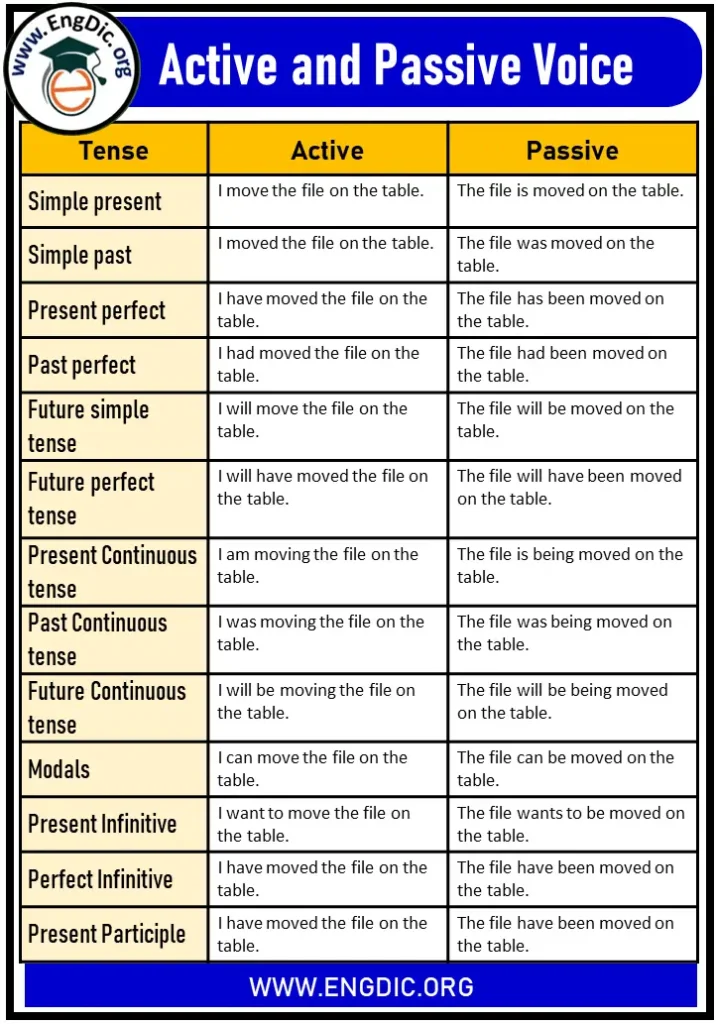
په پاسیو وایس کې، د جملې مفعول (Object) د فاعل ځای نیسي او کار پرې ترسره کیږي. دلته کوونکی یا معلوم نه وي او یا یې ذکر کول مهم نه وي.
جوړښت: Object + Be Verb + Past Participle (3rd form) + by + Subject
مثال: A letter was written by Ahmad. (یو خط د احمد لخوا ولیکل شو.)
کله Active او کله Passive Voice وکاروو؟
Active Voice هغه وخت وکاروئ کله چې:
تاسو غواړئ جمله لنډه او روښانه وي.
تاسو غواړئ په “کوونکي” (Subject) ټینګار وکړئ.
تاسو غواړئ وښایئ چې څوک د حالت کنټرول لري.
Passive Voice هغه وخت وکاروئ کله چې:
تاسو غواړئ په “مفعول” (Object) ټینګار وکړئ.
د کار کوونکی (Subject) معلوم نه وي.
تاسو نه غواړئ د کوونکي نوم واخلئ (مثلاً د چا د بد ښودلو مخنیوی).
په علمي او رسمي راپورونو کې، چیرې چې عمل تر کوونکي مهم وي.
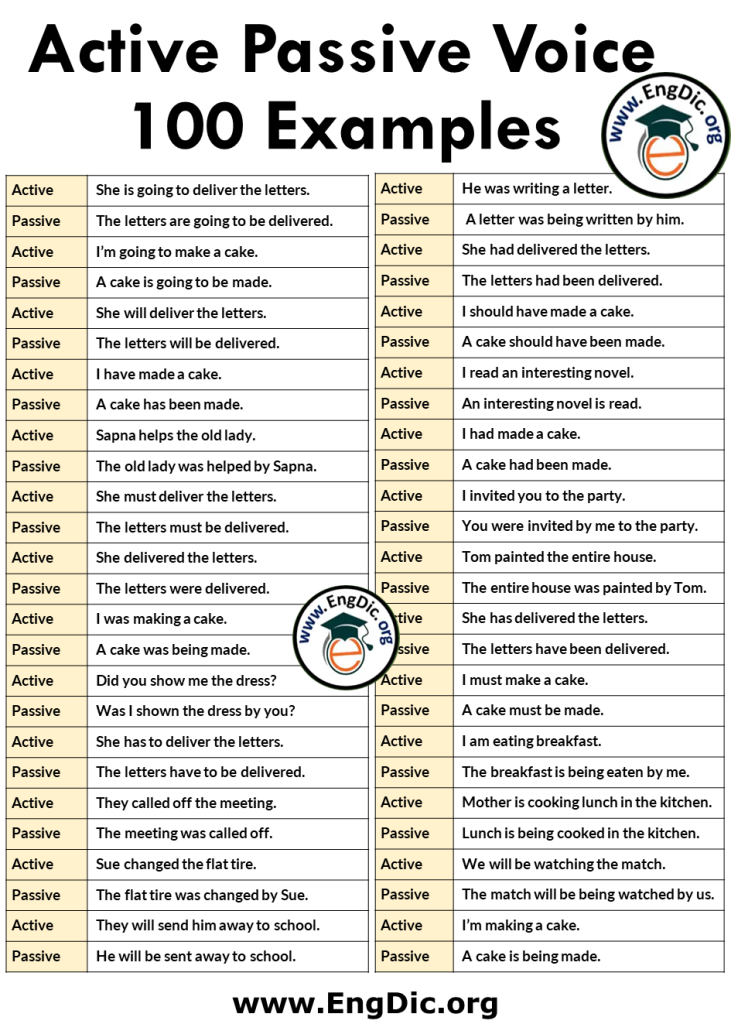
په اکټیو او پاسیو وایس کې ۱۰۰ مثالونه
دلته د انګلیسي مختلفو زمانو لپاره د اکټیو او پاسیو وایس جملې او مثالونه راوړل شوي دي:
1. Simple Present Tense (ساده اوسنۍ زمانه)
Active: I eat an apple.
Passive: An apple is eaten by me.
Active: She delivers the letters.
Passive: The letters are delivered by her.
Active: He loves me.
Passive: I am loved by him.
Active: I make a cake.
Passive: A cake is made by me.
Active: They play football.
Passive: Football is played by them.
2. Present Continuous Tense (اوسنۍ جاري زمانه)
Active: I am eating breakfast.
Passive: Breakfast is being eaten by me.
Active: Mother is cooking lunch.
Passive: Lunch is being cooked by mother.
Active: She is writing a letter.
Passive: A letter is being written by her.
Active: He is cleaning the room.
Passive: The room is being cleaned by him.
Active: I am making a cake.
Passive: A cake is being made by me.
3. Present Perfect Tense (اوسنۍ بشپړه زمانه)
Active: I have eaten an apple.
Passive: An apple has been eaten by me.
Active: She has delivered the letters.
Passive: The letters have been delivered by her.
Active: I have made a cake.
Passive: A cake has been made by me.
Active: We have finished the work.
Passive: The work has been finished by us.
Active: He has tricked me.
Passive: I have been tricked by him.
4. Simple Past Tense (ساده تېره زمانه)
Active: I ate an apple.
Passive: An apple was eaten by me.
Active: She delivered the letters.
Passive: The letters were delivered by her.
Active: Columbus discovered America.
Passive: America was discovered by Columbus.
Active: The cat killed the mouse.
Passive: The mouse was killed by the cat.
Active: I made a cake.
Passive: A cake was made by me.
5. Past Continuous Tense (تېره جاري زمانه)
Active: I was eating an apple.
Passive: An apple was being eaten by me.
Active: She was delivering the letters.
Passive: The letters were being delivered by her.
Active: I was making a cake.
Passive: A cake was being made by me.
Active: He was writing a letter.
Passive: A letter was being written by him.
Active: They were watching a movie.
Passive: A movie was being watched by them.
6. Past Perfect Tense (تېره بشپړه زمانه)
Active: I had eaten an apple.
Passive: An apple had been eaten by me.
Active: She had delivered the letters.
Passive: The letters had been delivered by her.
Active: I had made a cake.
Passive: A cake had been made by me.
Active: They had finished the project.
Passive: The project had been finished by them.
Active: He had locked the door.
Passive: The door had been locked by him.
7. Simple Future Tense (ساده راتلونکې زمانه)
Active: I will eat an apple.
Passive: An apple will be eaten by me.
Active: She will deliver the letters.
Passive: The letters will be delivered by her.
Active: I will make a cake.
Passive: A cake will be made by me.
Active: He will play the match.
Passive: The match will be played by him.
Active: They will build a house.
Passive: A house will be built by them.
8. Modals (Can, Must, Should, etc.)
Active: I can drive a car.
Passive: A car can be driven by me.
Active: She must deliver the letters.
Passive: The letters must be delivered by her.
Active: You should respect elders.
Passive: Elders should be respected by you.
Active: I have to do this work.
Passive: This work has to be done by me.
Active: They might win the game.
Passive: The game might be won by them.
نور بېلابېل مثالونه (Mixed Examples)
Active: The teacher praises him.
Passive: He is praised by the teacher.
Active: The boy teased the dog.
Passive: The dog was teased by the boy.
Active: Sapna helps the old lady.
Passive: The old lady is helped by Sapna.
Active: Did you show me the dress?
Passive: Was I shown the dress by you?
Active: They called off the meeting.
Passive: The meeting was called off.
Active: Sue changed the flat tire.
Passive: The flat tire was changed by Sue.
Active: The choir enjoys that piece.
Passive: That piece is enjoyed by the choir.
Active: Tom painted the house.
Passive: The house was painted by Tom.
Active: The two kings are signing the treaty.
Passive: The treaty is being signed by the two kings.
Active: Michael is baking a brownie.
Passive: A brownie is being baked by Michael.
Active: His grandmother looked after him.
Passive: He was looked after by his grandmother.
Active: I gave him a book.
Passive: He was given a book by me.
Active: Harry ate six shrimp.
Passive: Six shrimp were eaten by Harry.
Active: Mom read the novel.
Passive: The novel was read by Mom.
Active: We have published a magazine.
Passive: A magazine has been published by us.
Active: They will have finished the project.
Passive: The project will have been finished by them.
Active: The cat chased the mouse.
Passive: The mouse was chased by the cat.
Active: She wrote a song.
Passive: A song was written by her.
Active: The teacher explained the lesson.
Passive: The lesson was explained by the teacher.
Active: The company developed a product.
Passive: A product was developed by the company.
Active: The kids played in the park.
Passive: The park was played in by the kids.
Active: He fixed the car.
Passive: The car was fixed by him.
Active: The chef prepared a meal.
Passive: A meal was prepared by the chef.
Active: They built a skyscraper.
Passive: A skyscraper was built by them.
Active: She planted flowers.
Passive: Flowers were planted by her.
Active: The team won the championship.
Passive: The championship was won by the team.
Active: The doctor performed surgery.
Passive: Surgery was performed by the doctor.
Active: The police caught the thief.
Passive: The thief was caught by the police.
Active: He painted a landscape.
Passive: A landscape was painted by him.
Active: Students completed the assignment.
Passive: The assignment was completed by students.
Active: I am going to make a cake.
Passive: A cake is going to be made.
Active: She is going to deliver letters.
Passive: Letters are going to be delivered.
Active: I invited you.
Passive: You were invited by me.
Active: They will send him to school.
Passive: He will be sent to school.
Active: I should have made a cake.
Passive: A cake should have been made.
Active: I was playing video games.
Passive: Video games were being played by me.
Active: We will be watching the match.
Passive: The match will be being watched by us.
Active: Mark has tricked me.
Passive: I have been tricked by Mark.
Active: I have played the game.
Passive: The game has been played by me.
Active: The mother is feeding the baby.
Passive: The baby is being fed by the mother.
Active: Someone stole my bike.
Passive: My bike was stolen.
Active: John ate the pizza.
Passive: The pizza was eaten by John.
Active: The teacher gave an assignment.
Passive: An assignment was given by the teacher.
Active: The company will release a product.
Passive: A product will be released by the company.
Active: Mary baked the cake.
Passive: The cake was baked by Mary.
Active: J.K. Rowling wrote the book.
Passive: The book was written by J.K. Rowling.
Active: The mechanic repaired the car.
Passive: The car was repaired by the mechanic.
Active: Steven Spielberg directed the film.
Passive: The film was directed by Steven Spielberg.
Active: Sarah typed the letter.
Passive: The letter was typed by Sarah.
Active: I read an interesting novel.
Passive: An interesting novel is read by me.
Active: She will deliver the packages.
Passive: The packages will be delivered by her.
Active: I will have made a cake by tomorrow.
Passive: A cake will have been made by me by tomorrow.
Active: The company launched a campaign.
Passive: A campaign was launched by the company.
Active: He visited his grandmother.
Passive: His grandmother was visited by him.
Active: They had finished homework.
Passive: Homework had been finished by them.
Active: She will have been living in Paris.
Passive: Paris will have been lived in by her.
Active: We are working on the assignment.
Passive: The assignment is being worked on by us.
Active: The dog chased the cat.
Passive: The cat was chased by the dog.
Active: I wrote a story.
Passive: A story was written by me.
Active: They are building a bridge.
Passive: A bridge is being built by them.
د Active او Passive Voice پوهیدل د انګلیسي ژبې د سم او مسلکي کارولو لپاره اړین دي. پورتني په اکټیو او پاسیو وایس کې ۱۰۰ مثالونه به تاسو سره مرسته وکړي چې د دې دواړو حالتونو په جوړښت او کارونې پوره تسلط ترلاسه کړئ. تمرین وکړئ او هڅه وکړئ چې په خپلو ورځنیو خبرو کې یې وکاروئ.